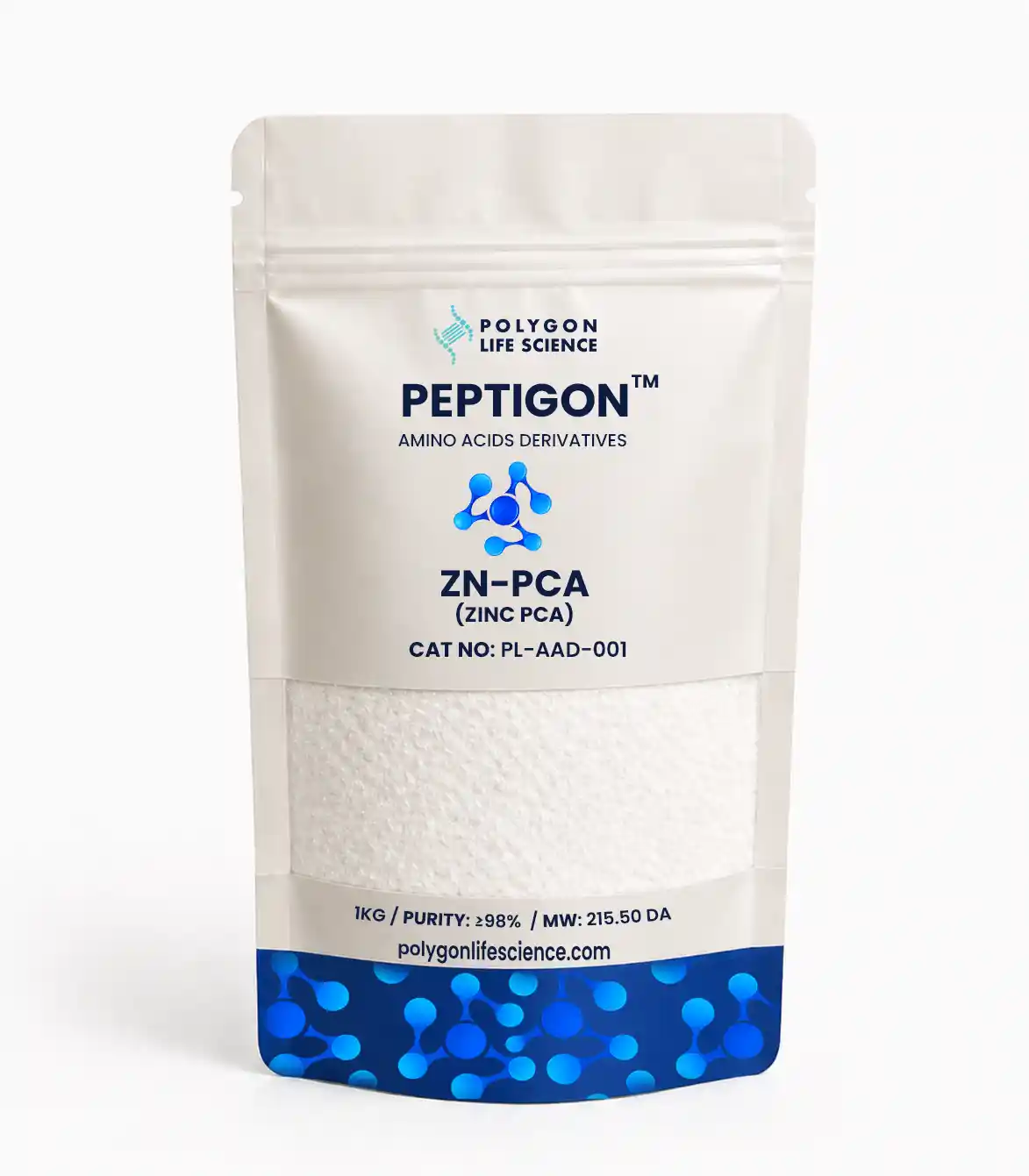
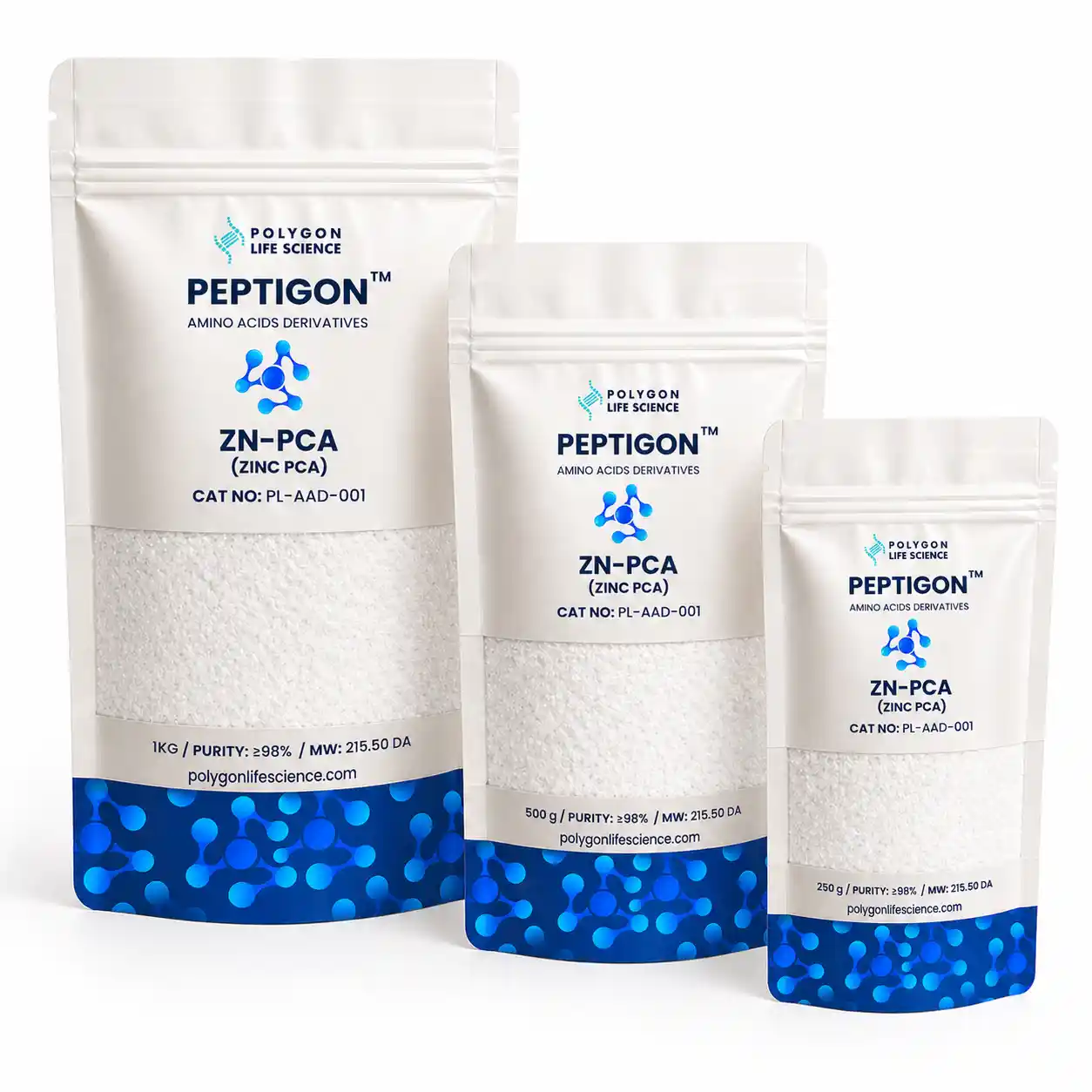
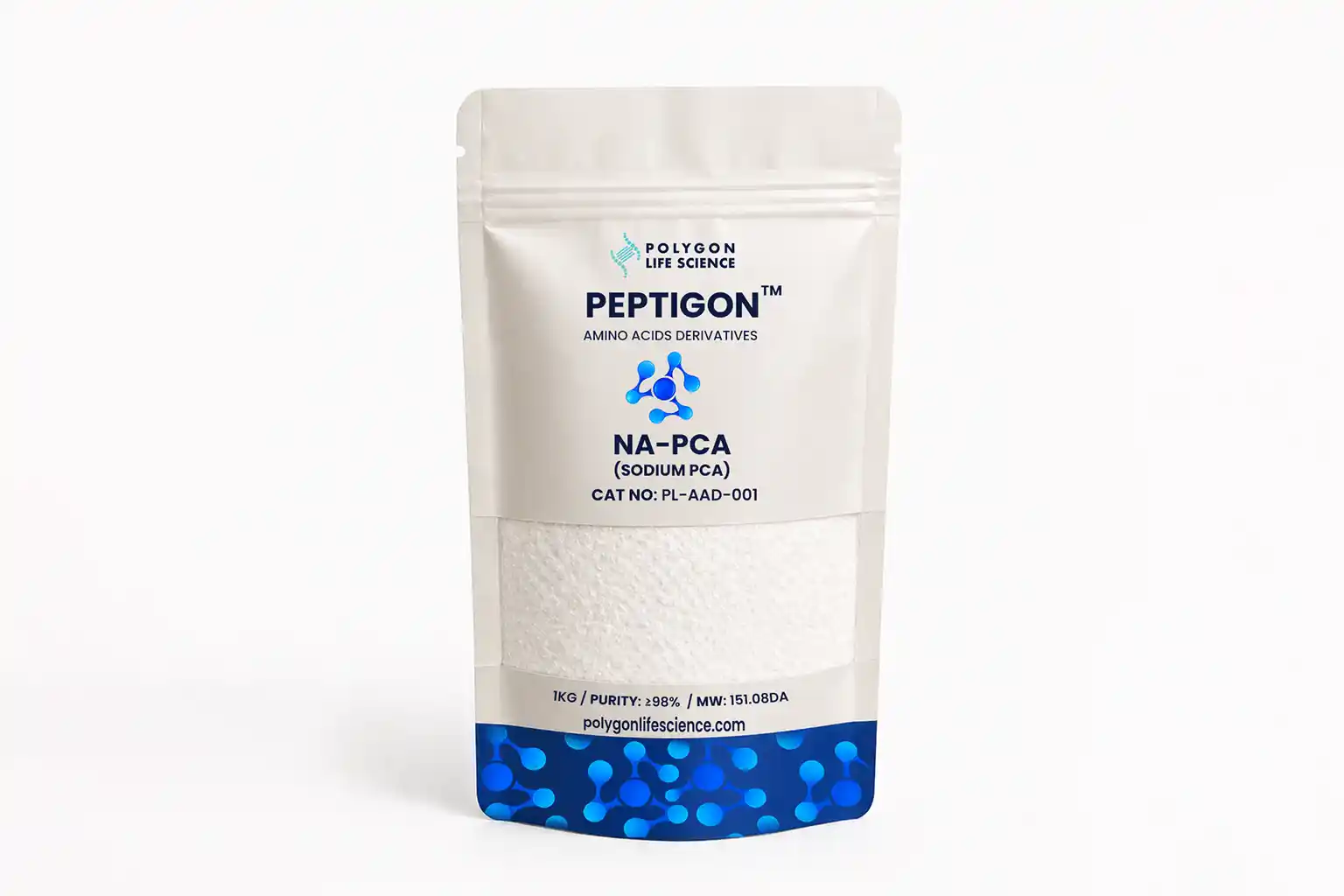
Zinc PCA Powder (≥98% purity) is a high‑performance, sebum‑regulating active ingredient supplied by Polygon Life Science, a premier B2B supplier of specialty cosmetic raw materials. As a trusted cosmetic ingredient supplier, we manufacture this zinc PCA for formulators developing acne control products, mattifying moisturizers, and sebum‑regulating serums that require both oil control and hydration – without the drying side effects typical of zinc salts.
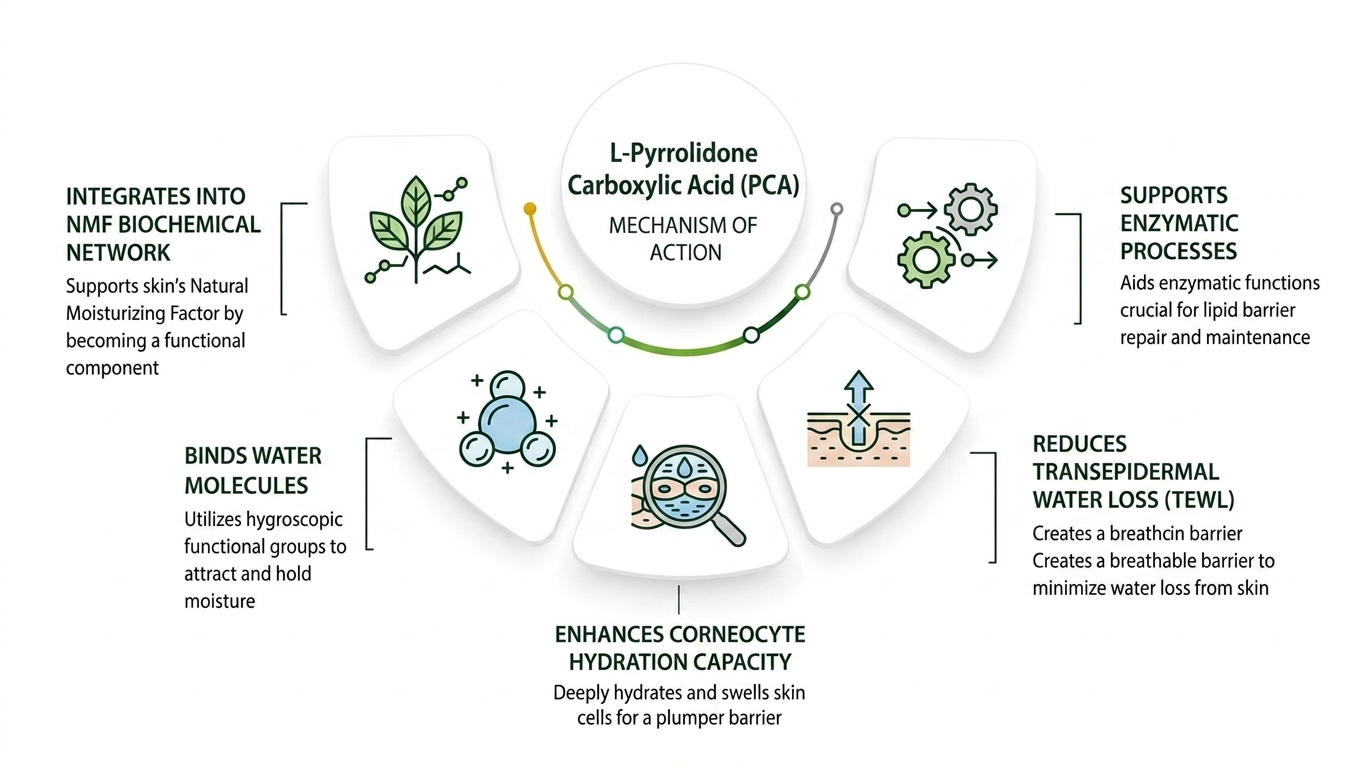
Unlike conventional zinc gluconate or zinc sulfate, our zinc PCA powder combines the antimicrobial and anti‑inflammatory power of zinc with the Natural Moisturizing Factor (NMF) intelligence of PCA. This non‑drying acne treatment ingredient maintains skin moisture while reducing sebum excretion rate by approximately 30% (in vitro). It is the preferred sebum regulating ingredient for oily skin formulations, blemish spot treatments, and men's grooming lotions.
What is the optimal pH range for Zn‑PCA stability in finished emulsions?
Stable between pH 5.0 and 6.5. Above pH 7.0, zinc hydroxide may precipitate as a white haze. Below pH 4.5, the PCA moiety protonates, reducing hydration efficacy. We recommend a citrate or lactate buffer if your formula drifts outside this range. We provide pH stability data for 12 months.
Can Zn‑PCA be used in anhydrous systems (e.g., oil serums, balms)?
No – Zn‑PCA requires water to release zinc ions and hydrate the PCA moiety. For anhydrous systems, consider encapsulated zinc or suspend Zn‑PCA in a polar oil with trace water (e.g., caprylic/capric triglyceride + 0.5% water). Best performance is achieved in water‑continuous phases (o/w emulsions, hydrogels).
Do you have clinical or in‑vitro data on sebum reduction?
Yes – in‑vitro study on human sebocyte cultures shows 29.7% reduction in lipid droplet area after 48 hours at 0.5% active. An ongoing in‑vivo study (20 subjects, 4 weeks, 2% Zn‑PCA in gel) preliminary data shows 26% reduction in sebumetry readings. Full reports available under NDA.